Wheel of Life: Balancing Decisions for Well-Being
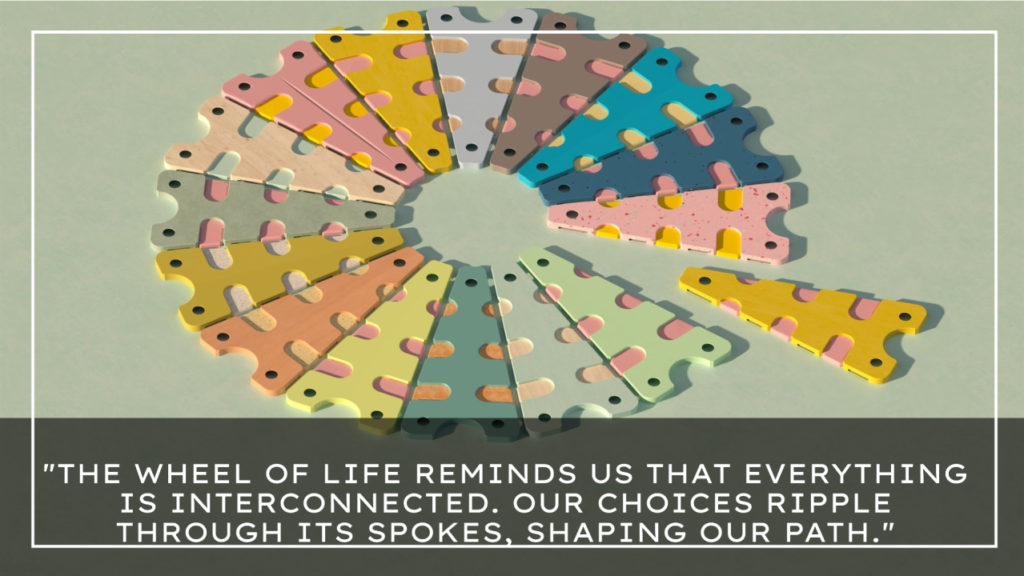
One of my friends was contemplating a job change and had two enticing job offers on the table. Using the Wheel of Life, he assessed various dimensions including Career Growth, Work-Life Balance, Compensation, Company Culture, Location, and Personal Development. As he evaluated Offer A, he realized it offered a significant career advancement and a competitive salary, but the commute was longer. That would impact his work-life balance. On the other hand, Offer B provided a better work-life balance and was closer to home, but with slightly lower compensation and fewer growth prospects. Reflecting on his priorities, he weighed each dimension and realized that while career growth and compensation are essential, maintaining a healthy work-life balance and proximity to family were equally important, if not more. He decided to go with Offer B. It aligned better with his overall life goals and values. Using the Wheel of Life helped him gain clarity and confidence in his decision, ensuring that he chose a job that not only advanced his career but also his overall well-being and satisfaction in life. So, what is the wheel of life? The Wheel of Life originated from the Buddhist tradition, symbolizing the cyclical nature of life. It’s a visual representation divided into segments representing various life domains. Originally used for spiritual reflection, it’s now widely utilized in coaching for self-assessment and goal-setting in diverse life areas. It visually represents various aspects of one’s life, typically depicted as segments of a circle. Each segment corresponds to a different life domain, such as career, relationships, health, and personal development. By assessing and rating satisfaction levels in each area, individuals gain a comprehensive snapshot of their current life balance and areas for improvement. The concept of interconnectedness within the Wheel of Life emphasizes the understanding that various aspects of our lives are interconnected and influence one another. When we assess different life dimensions on the Wheel of Life, such as career, relationships, health, and personal development, we recognize that these dimensions are not isolated from each other but are interrelated. For example, if someone experiences dissatisfaction in their career, it can have ripple effects on other areas of their life. It may impact their relationships with family and friends due to increased stress or time constraints, their health due to elevated levels of anxiety or burnout, and their personal development as they struggle to find fulfillment and meaning in their work. Conversely, improvements in one area of life can positively influence other areas. For instance, enhancing one’s physical health through regular exercise and proper nutrition can lead to increased energy levels and improved mood, which may positively impact their career performance and relationships. As a coaching tool, the Wheel of Life fosters self-awareness by prompting individuals to reflect on their overall life satisfaction and identify areas of strength and weakness. This heightened self-awareness serves as a foundation for setting meaningful goals and creating action plans to improve areas of dissatisfaction. By visually mapping out their life domains, clients can prioritize their goals and take proactive steps towards achieving a more balanced and fulfilling life. Seven steps to using the Wheel of Life By following these steps, you can use the Wheel of Life to help you make decisions that keep your life happy and balanced. “To delve deeper into this tool and explore its potential, feel free to contact me at shweta@cyg.today. Alternatively, visit cyg.today to discover how you can change your game today.
From Solo Act to Team Leader
Almost 15 years ago, I stepped into the role of a manager. My first time being a first time manager – it was both exciting and scary. It was like entering a new world in my career. I had more responsibilities, and everything felt uncertain. Very uncertain. Suddenly even my wardrobe was supposed to be powerful! In this edition, I am sharing my personal journey as a first-time manager, delving into the emotions, struggles, and pivotal lessons learned at that time. The first few months My first stint into the role of a manager while I had 4-5 years experience as a HRBP under my belt. I was part of the Corporate HR team and was given a team of Freshers (right from campus) to train and lead. My team was responsible for managing the HR life cycle (Hire to Retire) for Corporate Team + one smaller business unit. These new team members were completely new and my role was to train them and also get the deliverables achieved. Till now I used to be a one person in a does-it-all role. So my excitement at having a team to lead was sky high. Remember those early days, when we thought “Ab to kaam nahin karna padega” because now I was a manager. That’s what we used to think about our managers (at least I did, till I became one) 🙂 The initial excitement faded very soon. The three of them kept coming to me every 15 minutes or so, asking for some clarification or other. And I kept thinking – I have told you once before, why do you keep coming to me. I started comparing how efficient I was in their role. I was quite irritated. To top it off, my manager kept checking in on their progress with me. In my second or third 1-o-1 with my manager, when he asked about them I said, “they have only increased my work, the time that I used to take to complete was far less than answering their questions.” My manager laughed, and said, “You need to start delegating and reviewing and not sitting with them to do it. Have a daily call to assign and take reports of the tasks. And limit access to yourself. Then can speak to you at the beginning and end of the day, and push them to find their own ways.” I started to conduct “daily stand ups.” That’s what we used to call them. It made my life easier since there was a defined time in which we were meeting and they had to come prepared to ask their questions / doubts whatever they wanted to ask. I now started to like this new territory as there was time for me to think ahead since the immediate tasks were taken over by them. I started to think about how I can improve the processes. I had more people to share and have some lighter chat time. This new arrangement added more responsibilities on me. I started to ask for more from my manager and he was happy to delegate things to me since he became confident of me managing the current responsibilities well. This added to my personal and professional growth. As a manager, I started to feel very happy with how I was handling this phase. The first difficult conversation Very soon, I had a challenge when one of my team members complained about the behavior of the other.That she was rude to them and did not cooperate. Now the other two were from the same college and probably had ganged up. I tried to listen to both but thought since the other two are from the same college, it wasn’t going to be much help. I was not able to understand what was happening and I felt that going to my manager for such a small thing might make him think negatively about me. So I tried to talk to all three separately to understand and then got them all together to clear the air and get an agreement on the way ahead. This got sorted and they started to deliver as required and agreed. At the end of the year, from one of the two team members I got this feedback that they felt that I am biased towards the third one. Wow, that just hit me out of the blue!! I then brought this up with my manager, and he helped me realize that – I did the first thing right by talking to all three, getting an agreement on the way ahead. But I didn’t connect back again with each one of them. Maybe a follow up check in would have helped all three more. The first time feeling overwhelmed In another instance, one of things that I learnt while leading the team was managing time. This was the first time the concept of time management made sense to me. I remember one of the days I was working late in the office and my manager checked in to see what was happening. When I mentioned my to-do list, he was aghast. He said, “I didn’t know that you were so overworked.” He told me to go home, and that we will speak the next day. The next day he asked me to share how I made a note of work that needed to be done. I showed him my diary (those days there was no “one note” etc). He asked “how do you decide what needs to be closed today?” And I said in the sequence as it comes, and also depending upon who’s going to ask me for an update when. He asked me to create a list of activities that were pending. And then to write the dates by which they needed to be closed. Further on he said, “If you don’t know the dates, then first check with the stakeholders when they are looping you in. Align your priorities for the week
How Coaching Transformed the Way I Approach Life
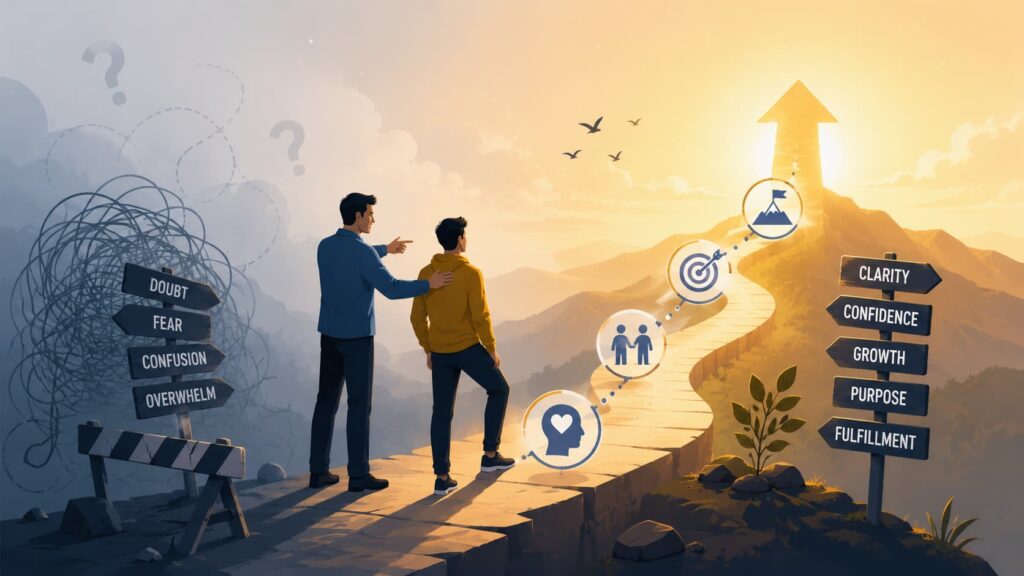
As I sit down to reflect today, I can’t help but feel immense pride in the journey I’ve been on. Coaching has not only transformed the way I approach life but also shaped me into the coach I am today. The steps I took years ago, though uncertain at the time, have become the foundation of who I am now—both personally and professionally. The Realization: I Wanted More A couple of years ago, I found myself at a crossroads. On paper, everything was perfect—I had a good job, my kids were growing up well, and I was enjoying time with family. Yet, there was an inner restlessness, a longing for something more. I couldn’t put my finger on it at first. Was it career growth? A personal passion? A need for deeper fulfillment? All I knew was that staying where I was didn’t feel right. That was when I decided to take a leap and enroll in a coaching program. But I also knew what I was signing up for—coaching requires you to be vulnerable. It often brings you face-to-face with inner truths and patterns you might not be ready to confront. I was aware that some parts of this journey could be uncomfortable, even overwhelming. Still, I felt like I was ready. Ready to look inward, challenge myself, and explore what lay beneath the surface. Taking that step wasn’t just about finding answers—it was about opening up to possibilities and giving myself permission to grow. The decision wasn’t easy, and it felt like a big investment of time and money. But I knew that if I didn’t take the first step, I’d never uncover what I was searching for. The Journey: Peeling Back the Layers Coaching didn’t provide instant answers. Instead, it was a process of exploration, reflection, and self-discovery. Through sessions with my coach, conversations with peers, and structured exercises, I began to ask myself tough but meaningful questions: At first, it felt like peeling an onion—every answer uncovered a new layer to explore. The journey was emotional and messy. Some days were filled with excitement and clarity, while others brought frustration and doubt. One of the most important lessons I learned along the way was to manage my emotions better. Instead of blaming situations or getting upset, I started focusing on what was in my control. I worked on shifting my reactions, which had a ripple effect on how I approached challenges at work and in life. The Transformation: A New Perspective Recently, I met an old friend after 4–5 years, and something she said struck a chord: “You’ve changed. You’re more patient, you focus on solutions, and you seem to look at the bigger picture without getting stuck in today’s struggles.” Her words made me pause and reflect. She was right—I had changed. Coaching had given me the tools to: Coaching hasn’t just been about finding the answers to “what’s next.” It’s been about building the mindset and skills to thrive through the uncertainties of the journey itself. The Ongoing Journey Today, I’m still exploring, learning, and growing. Coaching remains my anchor, giving me bursts of energy and clarity on days when self-doubt creeps in. It’s taught me that progress doesn’t have to be perfect—it just needs to continue. For anyone feeling that inner longing for something more, my advice is simple: What About You? If you’ve ever felt that longing for something more—whether in your career, relationships, or personal growth—pause and reflect: Transformation doesn’t happen overnight, but it starts with a decision to try. I’d love to hear your thoughts or experiences in the comments—have you taken a step like this? What’s holding you back from exploring your next chapter?